
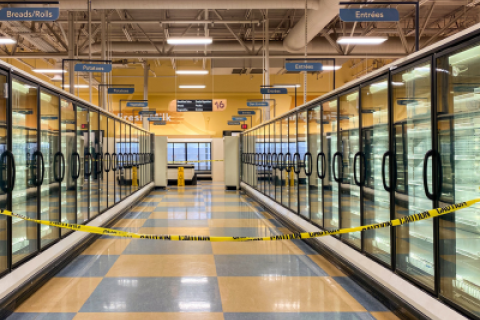
Cyberattacks on supermarkets are posing new threats, with recent incidents showing that digital interference can have consequences far beyond websites, payment systems and customer data.
On 2 November, supermarkets in Belgium, Luxembourg, Sweden and Estonia reported overnight refrigeration problems. Delhaize confirmed an IT incident affecting cooling systems in dozens of stores. Colruyt reported five affected shops, while Sweden’s ICA and Coop also experienced incidents. Investigations are ongoing, and there is no confirmation that the attacks are connected.
The incidents follow a major attack in France in October, when hackers manipulated connected refrigeration controllers at hundreds of supermarkets, forcing units into defrost mode. Temperatures reached 50°C, resulting in spoiled stock, fires at some locations and damage estimated in the tens of millions of euros.
The disruption is not limited to refrigeration. In October, a cyber incident at Ahold Delhaize led to precautionary shutdowns affecting websites, apps, online orders and logistics across several European and US banners. The 2025 attacks on M&S and Co-op, alongside the ransomware incident at supply-chain technology provider Blue Yonder, offer further reminders of how quickly disruption can spread between businesses.
Behind these incidents is a growing dependence on connected systems throughout the food chain. Refrigeration, warehouse management, production equipment and building controls are increasingly networked, sometimes with remote access for external contractors. These connections can become entry points when software is outdated, passwords are weak or systems are poorly separated from corporate networks.
The consequences are tangible: lost stock, interrupted deliveries, production delays, food-safety concerns and damaged customer confidence. As more physical operations depend on connected technology, protecting those systems is becoming as important as securing company data. Cyber resilience is becoming part of keeping shelves stocked and supply chains moving, not simply an IT concern.