
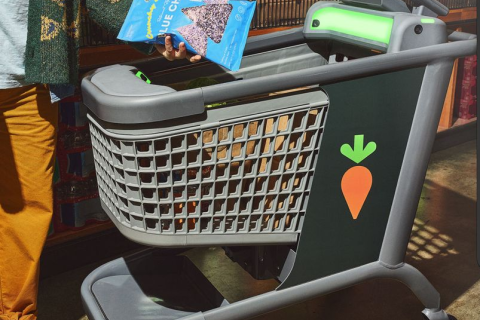
Instacart’s decision to discontinue its Caper smart carts leaves supermarket groups facing a rethink. Carrefour Belgium’s trial is now on hold, while Morrisons is ending its smart cart pilot. Other retailers using Caper, including US Kroger, Wakefern, Schnucks and Australian Coles, will need clarity on future servicing and support as the business winds down by Q2 2027.
The withdrawal does not mean the technology failed with shoppers. Instacart reported Net Promoter Scores above 70 at established locations and claimed double-digit basket growth across retail partners. An on-screen “Got everything?” prompt reportedly lifted basket size by almost one percentage point. Separately, a 2026 Bayes Business School study of 12,418 shopping sessions at a German supermarket found smart-cart users spent 32% more and bought 25% more items on average.
The problem was scale, not necessarily shopper appeal. Instacart said retailer adoption had not grown quickly enough to justify continued investment. Smart carts require hardware, maintenance and systems integration; retailers must persuade customers to use them and demonstrate returns across stores.
Alternatives remain. Amazon continues to develop its Dash Cart, while Veeve, Shopic and Israel-based Cust2Mate offer smart-cart or retrofit solutions. Carrefour already works with Cust2Mate in France and Israel, and Belgium’s Colruyt has developed its own Smart Cart. These options differ in functionality and availability, so they are not automatic replacements.
So, the end of Caper does not mean the end of smart shopping carts. Instacart’s withdrawal does, however, highlight the challenges of rolling out new technology across large supermarket networks, where investment, maintenance and customer adoption all need to add up commercially.